

What Is Stamp Duty And When To Pay It?
Buying and selling a home involves many different costs, some of which you can control, some of which you cannot. At a time when you face many decisions and are balancing costs and making money available to ensure a house move is cohesive and less stressful, it is important you understand all the different possible costs you face. A major cost in the house-moving process is stamp duty. We will use this article to explain in detail what stamp duty is, how it is calculated and when and how you pay it, but first let’s start with the key facts:
– Stamp Duty Land Tax is a Government tax on the purchase of a property, which is paid to the HMRC
– Stamp duty is paid to the HMRC via your conveyancer or solicitor as part of the conveyancing process
– You pay stamp duty when the house-buying process completes; you must pay it within 14 days of completion to avoid penalty charges and interest charged by the HMRC.
– How much stamp duty you pay will depend on the price you pay for the property, whether you have bought a property previously, whether you own another property and whether the property is residential or mixed-use
– As of September 2022, you don’t need to pay stamp duty on a property that costs you less than £40,000, and you don’t pay stamp duty on the first £250,000 of a property’s cost.

Explaining the basics of stamp duty
Stamp duty land tax is a cost paid only by the buyer in a property transaction, and only applies to properties bought in England and Northern Ireland. Properties in Scotland are subject to Land and Buildings Transaction Tax, while anyone buying property in Wales must pay Land Transaction tax. The payment of stamp duty is a standard part of the conveyancing services undertaken by your conveyancer or solicitor, and as such you do not need to do anything other than make the required funds available. However, a good professional conveyancer will advise you of the overall stamp duty cost your property transaction is subject to, and will explain how this figure is calculated and when you need to have the money available. Conveymoving can assist you find a professional good conveyancer.
When do I need to pay stamp duty?
You pay stamp duty when the property transaction completes. Your conveyancer will keep you informed when this is likely to be and you will need to plan towards this in terms of releasing money and making it available. In normal circumstances it is a good idea to transfer this money to your conveyancer upon the exchange of contracts, as completion typically follows soon afterwards, and stamp duty must be paid within 14 days of completion.
In some cases you will have a choice in how stamp duty is paid. Some solicitors will add the stamp duty figure to their normal conveyancing fees, so you pay one lump sum for all their services/costs, while others will collect the money from you in the days before completion. It should be explained to you how the stamp duty payment will be processed, so you can prepare accordingly.
The process of paying stamp duty includes the completion of a tax return to HMRC, much like paying any form of tax. Although this will be taken care of by your conveyancer, it is important to note that a return must be submitted even if you are exempt from paying stamp duty on the property transaction in question unless the price is less than £40,000.00. You could face a fine if there is no return made.
How to calculate what stamp duty you are paying
Stamp duty is calculated using different bands, and the final figure is put together based on how much of your property fits into each band. You can therefore use the following four categories to estimate how much stamp duty you might need to pay for your property purchase, but it is important that a professional conveyancer confirms this figure for you.
Residential properties
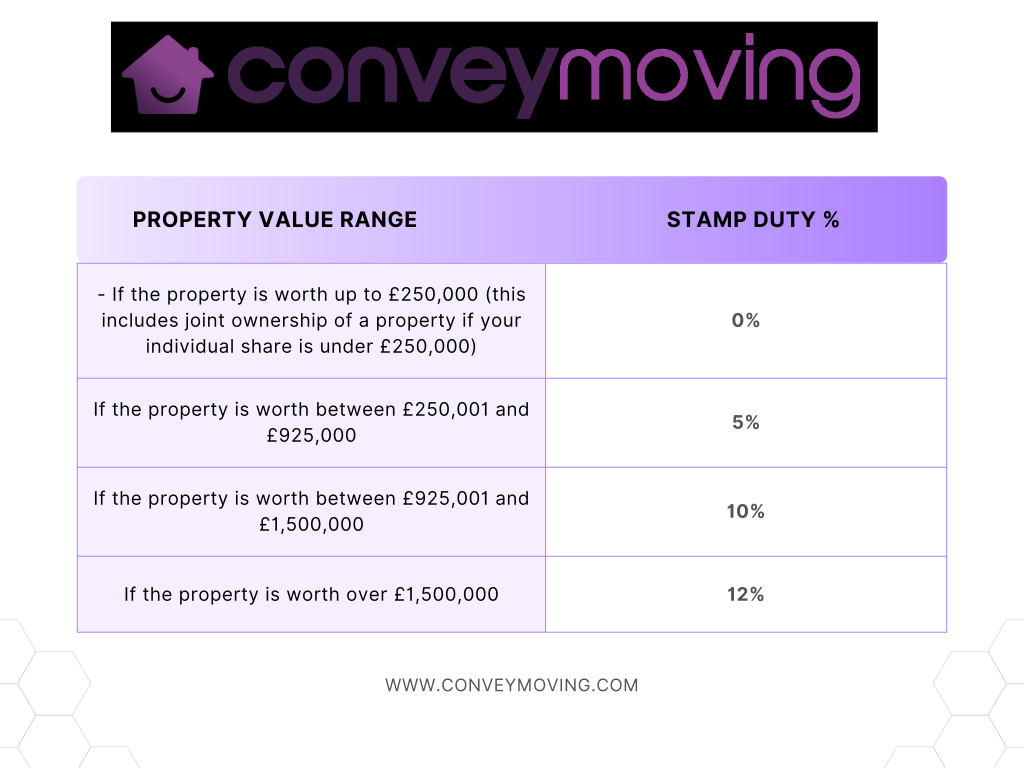
for the standard sale of a freehold (and most leasehold) property, the following rates will apply, and you pay for how much of the cost falls within each tax band:
– If the property is worth up to £250,000 = 0% stamp duty (this includes joint ownership of a property if your individual share is under £250,000)
– If the property is worth between £250,001 and £925,000 = 5%
– If the property is worth between £925,001 and £1,500,000 = 10%
– If the property is worth over £1,500,000 = 12%
First-time buyers
It is very challenging for first-time buyers to enter the property market, so they are afforded some help with first-time buyer stamp duty costs in order to encourage them into the market. You qualify as a first-time buyer if you have not owned any type of property before, including abroad, and if you are making a joint purchase, both parties must be first-time buyers. A first-time buyer qualifies for first-time buyer stamp duty exemption in some circumstances.
You can qualify for a first-time buyer stamp duty exemption if:
– You are defined as a first-time buyer and are buying a property for residential purposes
– The property is below £425,000 in value
– If the property is below £625,000 in value you will pay 5% stamp duty only on the portion above £425,000
– If the property is above £625,000 then the normal stamp duty rates will apply, as per the residential properties detailed above
Mixed used properties
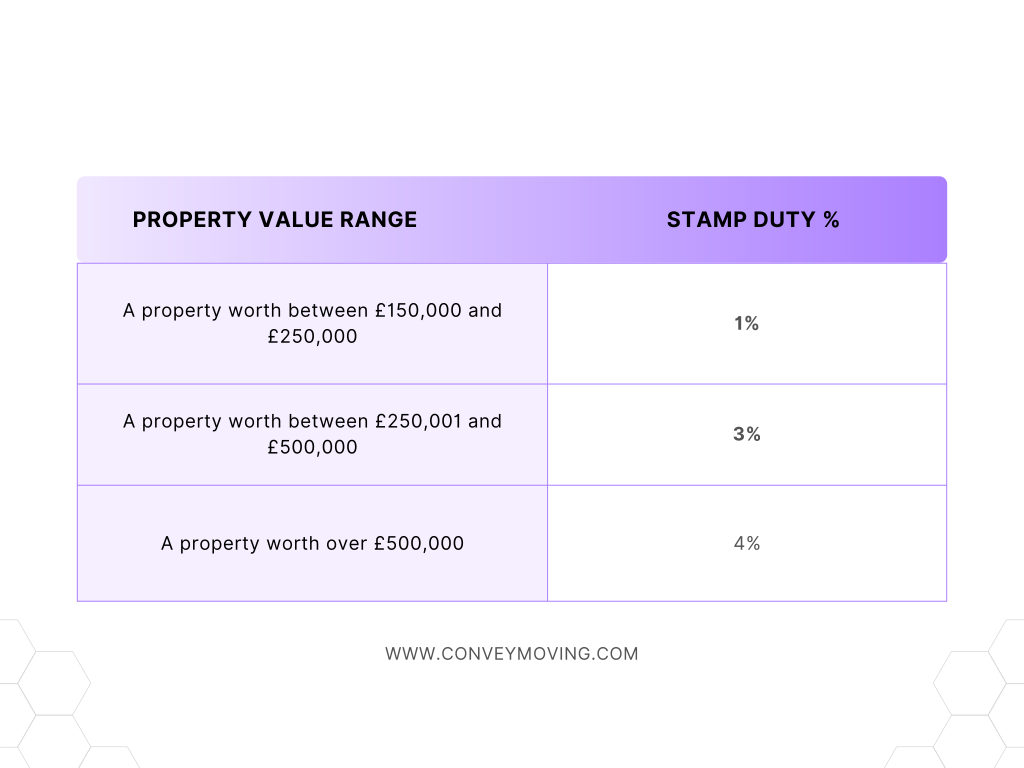
A property qualifies as a mixed-use property if it shares elements of a residential and non-residential property, such as a flat above a shop or a house attached to agricultural farmland. In this case the buyer will pay a reduced amount of stamp duty land tax, essentially because less of the land portion is being used for residential purposes. So in such circumstances:
– A property worth between £150,000 and £250,000 = 1%
– A property worth between £250,001 and £500,000 = 3%
– A property worth over £500,000 = 4%
Buy-to-let properties
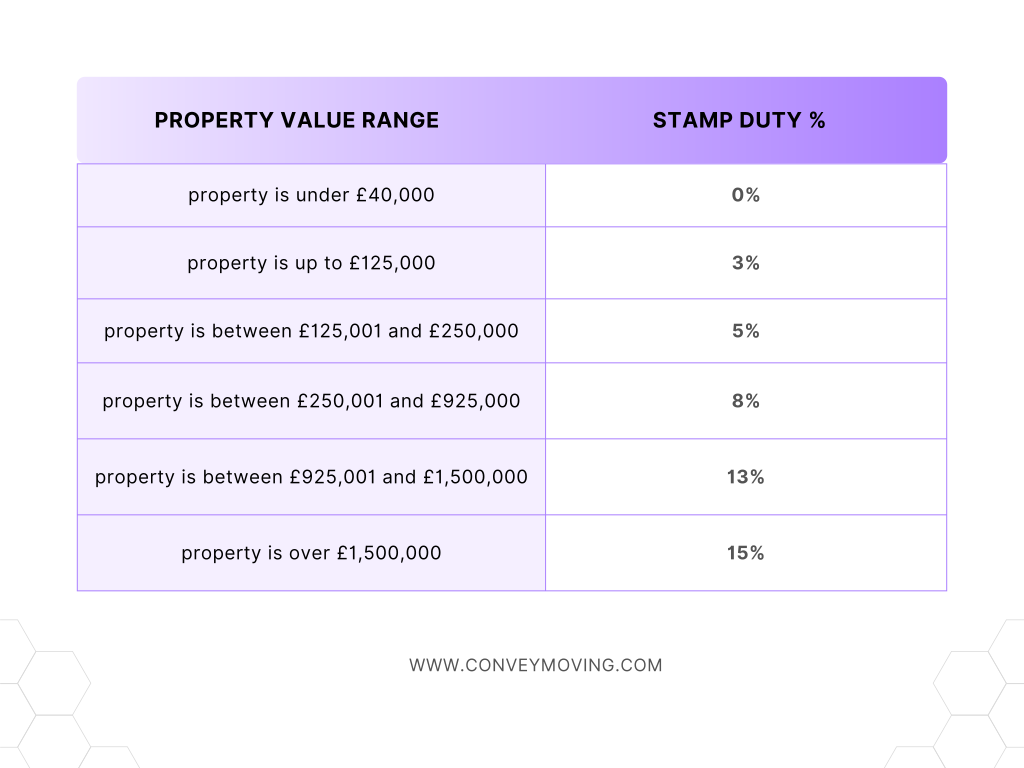
This section applies to buy-to-let landlords, anyone with a second home and anyone with a holiday home. Buy-to-let stamp duty is effectively a surcharge added onto the standard rate of stamp duty, to acknowledge the fact you have more than one property. So if you are buying an additional property you will be subject to a surcharge as follows:
– If the property is under £40,000 = 0%
– If the property is up to £125,000 = 3%
– If the property is between £125,001 and £250,000 = 5%
– If the property is between £250,001 and £925,000 = 8%
– If the property is between £925,001 and £1,500,000 = 13%
– If the property is over £1,500,000 = 15%
With regards to buy-to-let stamp duty, it is important to note that if you are buying a property at the same time as selling one, you may have to pay buy-to-let stamp duty if you buy the new property before you sell the first one. This is because you are classed as owning two properties at the same time. However, you can reclaim this cost when you eventually sell the original property, although you have a maximum of 18 months from the date of the purchase transaction to complete the sale and reclaim the cost.
Valuable help with understanding your stamp duty responsibilities
Whether your property purchase means you are subject to residential stamp duty, first-time buyer stamp duty or buy-to-let stamp duty, you can use a stamp duty calculator to give you a rough idea what the cost of your property transaction will equate to. To understand stamp duty more and to receive help and instruction on the stamp duty process, contact Conveymoving today and we can assist you to find only the best conveyancer/solicitors.


